
Can a Tire Be Patched? Plug vs. Patch — and When the Answer Is No
Nail in your tire? Before you buy a new one, read this. Most tread punctures are a $75 repair — but a plug from a gas station kit and a proper internal patch are not the same fix, and some tires can't be safely repaired at all.
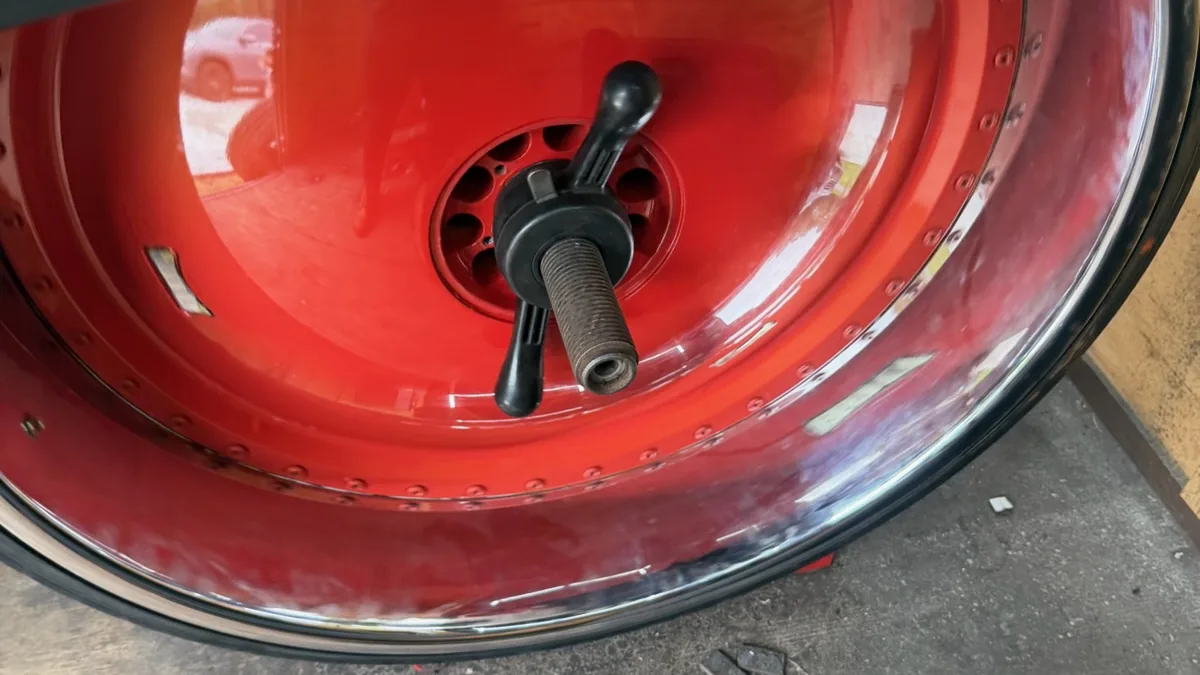
You hear the click-click-click on the way home, or the low-pressure light comes on two days in a row, and there it is: a nail head sitting flush in your tread. The first question everybody asks is the same one — can this tire be patched, or am I buying a new tire?
Here's the honest answer we give on the phone every week: most tread punctures can be repaired, properly and permanently, for a fraction of what a new tire costs. But "most" isn't "all," and the difference is worth understanding before somebody sells you either a repair that isn't safe or a tire you didn't need.
Plug vs. patch — they are not the same repair
A plug is the sticky rubber string that gets pushed into the hole from the outside. You've seen the kits at the gas station. The tire never comes off the wheel, nobody sees the inside, and the whole job takes five minutes. As a get-you-home fix, a plug has its place. As a permanent repair, it's a gamble — the plug seals the hole but nobody has checked whether the puncture damaged the inner liner or the belts, and plugs can weep air slowly for months.
A patch — the proper version — happens from the inside. The tire comes off the wheel, the tech inspects the whole inner liner, the puncture channel gets cleaned out, and a combination patch-plug is bonded to the inside of the tire so it seals both the liner and the channel. That's the repair the tire industry actually endorses, and done right it lasts the remaining life of the tire.
When we do a mobile tire repair, it's the second kind. The tire machine rides in the trailer, so "we'd have to take the tire off the wheel" isn't a reason to plug it and hope — dismounting is just part of the job.
When a tire CAN be repaired
The rules are simpler than most people think. A puncture is generally repairable when all of these are true:
- It's in the tread area — the flat part that touches the road, roughly the middle three-quarters of the tire's width
- The hole is ¼ inch (6mm) or smaller — nails, screws and most road debris qualify
- The tire still has legal tread depth left — repairing a worn-out tire is money down the drain
- The puncture doesn't overlap a previous repair
- The tire hasn't been driven flat — running on a flat even a short distance can grind the sidewall apart from the inside
Tick all five boxes and a repair isn't a compromise — it's the right call. The patch outlasts the tread.
When the answer is no — sidewalls, shoulders and run-flats
A puncture in the sidewall — or the shoulder, where the tread wraps into the sidewall — can't be safely repaired. Not "shouldn't," can't. The sidewall flexes with every rotation, and no patch can bond to a surface that's constantly working. A sidewall repair that holds air in the driveway can let go at 70 on I-75, and that's not a risk any honest tire man will sell you.
Same verdict for a tire that's been driven on while flat. The sidewall may look fine outside while the inside is full of rubber dust — that's the tire eating itself. When we dismount a tire like that, the damage is obvious in seconds, and we'll show it to you rather than ask you to take our word for it.
Run-flats are their own case: after a full pressure loss, most manufacturers say replace, not repair, because the reinforced sidewall that carried the car has been stressed in a way you can't inspect away.
If your tire lands in this category, it needs replacing — and we do that on the same visit. The truck carries tires, so a mobile tire replacement doesn't mean a second appointment. We'll quote the tire on the phone before we roll.
How long does a proper patch last?
Done right — internal combination patch, cleaned channel, inspected liner — the repair lasts the remaining life of the tire. It's not a temporary fix and it doesn't need "checking on." Florida heat doesn't change that; a bonded internal patch handles summer pavement fine.
What doesn't last is the gas-station string plug. If you had to use one to get home, that was the right move — just treat it as a bandage and have the tire properly repaired soon after. We've pulled plenty of weeping plugs out of tires and patched them correctly in the customer's driveway.
What a tire repair costs in Ocala
Our numbers are public: a passenger flat repair is $75 in our core area, and every mobile call carries a $100 service fee plus a $20 fuel surcharge — that's the truck, the tire machine and the trip coming to you instead of you limping to a shop on a bad tire. You get the whole number on the phone before we head out, and it doesn't change when we get there.
Compare that against a new mid-range tire — often $150 to $250 plus mounting — and the math is easy when the tire qualifies for repair. And when it doesn't qualify, you're not paying us to pretend otherwise: we'll tell you it's a replacement, show you why, and quote the tire straight.
Stuck somewhere right now rather than reading ahead? That's what the 24/7 roadside tire service is for — nights, weekends and holidays included, anywhere in Marion, Lake and Sumter counties.
The honest-answer rule
Every repair-or-replace call comes down to the same rule we run the whole business on: we'd rather tell you the truth about your tire than make an extra dollar on the wrong fix. Sometimes that means a $75 patch instead of the new tire you were braced for. Sometimes it means telling you the sidewall's done when a plug kit swears otherwise. Either way you get the straight answer — it's a big part of why our Google rating reads the way it does.
Nail in your tire right now?
We repair it properly, from the inside, at your home, work or roadside — anywhere in Marion, Lake and Sumter counties. Quoted on the phone before we roll.
Call (352) 470-4410Quick answers
Can you patch a tire sidewall?
No — and you should walk away from anyone who says yes. The sidewall flexes constantly as the tire rolls, so no repair can bond to it safely. A sidewall puncture, bubble or gash means the tire needs replacing. We can usually do that the same day, at your location.
Is a plug or a patch better?
A proper internal patch (technically a combination patch-plug) is the repair the tire industry endorses — the tire comes off the wheel, the inside gets inspected, and the repair bonds from the inside out. A string plug from the outside is a temporary get-you-home fix, not a permanent repair.
How much does it cost to patch a tire in Ocala?
With us, a passenger flat repair is $75, plus the $100 mobile service fee and $20 fuel surcharge for the trip to you — quoted as one total on the phone before we roll. The repair is done properly, from the inside, at your home, work or roadside.
How long can I drive on a plugged tire?
Treat a string plug as a bandage: fine to get home or to work, but have the tire properly patched soon. Plugs seal the hole without inspecting the damage inside, and they can seep air slowly. A proper internal patch afterward makes the repair permanent.
Can a tire with a nail in it be repaired without taking it off the car?
Not properly. A permanent repair requires dismounting the tire to inspect and patch it from the inside. Our truck carries a tire machine, so we do exactly that in your driveway — the tire comes off the wheel, but your car never leaves home.
What we do about it
Mobile Tire Repair
Picked up a nail on 441? We come to the tire instead of making you drag the tire to us — driveway, work parking lot, or the side of the road.
Learn more →Mobile Tire Replacement
The tire, the install and the disposal in one visit, wherever the vehicle is sitting. You never load a wheel into a trunk.
Learn more →Roadside Tire Service
Stranded on the shoulder is not the moment to start calling around. One number, any hour, and we come to you.
Learn more →Flat tire? We're already rolling.
Call or text (352) 470-4410 and tell us where you are. Most Ocala-area calls are handled the same day — often within the hour.